a follow up :: February 6, 2026

“Even so we knew all the time that…some day the landmarks would emerge again, and we held to the memory of them; we reminded ourselves and our friends of them; we delighted to find them, in miniature, in individual relations…Those landmarks that had made us a part of society we discovered to be certain elements of fellowship that we came to value for ourselves and for others - all others; and we looked for human beings everywhere and for fellowship.”

~Wm Stafford, Down In My Heart: Peace Witness In Wartime

Just a couple of days ago I was walking around campus with a friend after our film class discussing what the Italian director Michaelangelo Antonioni might have been trying to say in his 1960 film, La Notte. The film, made in the shadow of Mussolini’s fascism, looks at the rather ordinary struggles of a married couple, but it puts this struggle in the context of the larger cultural shifts happening in 1960’s Italy. While my friend and I walked, we were only a few miles from where, the previous Saturday, ICE agents had gassed peaceful protestors — including children and families — and I thought about this, the way that upheaval and resistance happen on the same plane as the minutiae of our lives and somehow, we are required to do both. It’s a lot for a body and mind to process.

I am not naturally the type to lead a rally or seek out large gatherings. I seek out conversation and intimacy, ground-level kinds of assistance. I think we need both the large and loud as well as the small and quiet if we are going to rescue this country back from the terror of the Trump administration and the people who support it (or address any of the other myriad crises we are facing.) So yes, there is an urgent need for speaking up, braving the real threat of tear gas or militia-haunted voting lines. But it is equally vital that we engage in continual small actions that build fellowship and promote human connection: like film discussions, quitting the consumption cycle, visiting lonely parents, sending money, making meals for people, reading books to educate ourselves on issues, and making and experience art. I will be doing many of these things. But almost none of them will make it into this space. We live in a time when performing substitutes for action. Daily, we discover that people present themselves as one thing while secretly supporting and engaging in the worst kinds of behaviors. Anyone can post words and pictures and pretend to care. At the end of the day, only we can know if we are actually interested in justice and willing to change our lives to make it happen. Only we know the particular opportunities and needs that we are suited to meet. So I say, go do all kinds of good work, whatever is before you to do, my friends. Love the hell out of people. You don’t need to keep the receipts.

Some things I am reading and thinking right now:

~ One Day Everyone Will Have Always Been Against This // Omar El Akkad I am lucky enough to get to hear El Akkad speak semi-regularly at literary events around town and appreciate his work so much. In this book, which won the National Book Award, he confronts the passivity with which Americans have responded to the Palestinian genocide.

~Reflections on how writers can respond in dark times What is the place of restorative narratives in a time of crisis? Modern literature loves a cynical, bare-all story, and I think those can be vital, but maybe we are in need of something else right now too.

~ Is your social life missing something? Ezra Klein hosts Priya Parker to talk about hospitality, gathering, and making time for community. I love this episode SO MUCH. Practical tips for real people on how to make gathering doable. I’ve also ordered the book. We are engulfed by artificiality. Making face-to-face connections is an act of resistance by itself.

~ Softening the Clenched Fist A longtime reader and friend posted this from Krista Tippet in the comments of the last post. “one of the most powerful ways we can be present to our world’s pain is with a countercultural tenderness.”

~Vermiglio Speaking of Italian films. This award-winning stunner from Maura Delpero stayed with me for days. It’s incredibly quiet and spare, the kind of film that is more like a piece of art than entertainment. I love stories about the lives of women and this one has so many gorgeous domestic and costume details too.

~Held // Anne Michaels. 2024 Booker Prize winner. From Michaels’ herself : “Every day writing this book I asked myself: in these urgent times, what voice might be small enough to be heard; what do we need now. We measure history by events and actions, but this book wants to assert a different measure for history, the real and powerful effect of our inner lives – what we believe, what we value, what we love, what we aspire to.” This is a great example of restorative narrative. I loved this book. Michaels is a poet first, and it shows in the way she crafts the novel. Less about plot, more about ideas. I am going to read it again with a pencil in hand.

~You Have To Be Human - Freya India is a Gen Z writer that frequently writes about the effects of technology on people her age. She’s a sensitive and wise voice we should be listening to. “Stand up for good art and good ideas and good choices! I’m so bored of hearing that’s valid! and you do you! not just from AI bots but from people, human beings, those who have blunted themselves and their beliefs.”

~Stand With Minnesota - All kinds of links for donations that support everything from legal rights to help with pets who have been left behind by detained immigrant families. Look for the helpers and support them!

That’s all for now. Guard your peace, friends. Turn it off, turn it down, make space for your body.

Much love.

Tonia

What I want to say :: January 2026

I’ve been thinking so long about what to say in this space: Resist, Hang in there, I can’t believe it either, Be vigilant, Nourish yourself, Find someone to be kind to, Fly a protest flag… nothing seems right. I’m as devastated, angry, horrified, and searching as the rest of you and I don’t know what to say about it.

If I skim the news at all these days, it is for stories of resistance. I want to know what ordinary people like me are doing and fortify my imagination for responses. I hope I will act if the chance comes to me. I hope I put my body and my privilege in front of whatever cowardice arises. I hope my voice is loud when I need to shout. I hope I have words to say. I hope I am brave.

I’ve got friends who are marchers and others who are builders and I don’t know where I fit between them, but I’ve had Kyce Bello’s poem in the footer of this website for several years now and I returned to it again today to find a little thread of possibility for myself in these terrible times.

Make me a figure with a womb

And relict heart. Make me

the seam that holds the tattered land together

and let me be the speaker that sings

rise, rise

all across the shapely ground.

There is a place in this struggle for the healers and menders too.

This past weekend would have been the poet William Stafford’s birthday. Stafford was a pacifist - a conscientious objector in WW2 - a position that almost no one could understand. But for Stafford, violent action “signal[ed] a failure of imagination.” “Restraint,” he said, “must come from citizens…coercion by violence has hardened much of the world; that feeling lasts. But moderating it is the patient, worthy job.”

Almost everyone I know is numbing themselves against the sharp edges of this terrible now. It is safer to become hard than to bleed. To stay soft and hopeful, open to healing, takes real strength. Stafford’s son Kit said, “my father’s ambition was boundless. A target of his own country’s disdain, even hatred, he had begun his mission of universal reconciliation.”

I am not thinking about a kind of reconciliation that gives hate a pass, or ignores the violent actions and inactions of selfish people. I am thinking about the kind of courage that remains in place, that does the terrifying work of resistance, but also the small work of unplugging from the machine, consuming less, creating safe homes, inviting people in, listening to fears and frustrations, and being forcefully and unapologetically human in a world that wants to turn us all into fodder for the money-and-war machines.

Maybe, what I want to say (to myself and anyone else who needs to hear it) in this time of unbelievable disorientation is: Be hungry for more than what this stunted, sham, plastic world is offering. It runs on fear and scarcity, so cultivate abundance and curiosity. Make connections. Make a coffee date. If you have extra, send some money to the helpers, the fighters, the guardians. Turn off the TV/computer/phone/or whatever damn device is cluttering your mind. Know less about every day’s events and go deep on birds or poetry or physics or history. Feed your imagination. Play a board game. Walk down the street with a smile. Support the library. Read the old books. Eat dinner at your table with candles lit. Donate dog food to the shelter. Memorize a joke and tell it to everyone. Cuss a little. Have a pastry. Take a walk. Learn to juggle. Climb a tree. Write a really bad poem. LIVE. What we’re here for is not just a righteous posture or the destruction of the bad guys or the freedom to Netflix until our eyes bleed. It’s so much more. Be a body, be a spirit, be a voice, a vote, a seed, a light, a life.

Sending love,

tonia

EDITED TO ADD: After I set this to post, there was another shooting in Minnesota. I hope you will read my words here and know that I am not offering platitudes about how we should respond to acts of murder and injustice, but rather a way of carrying on in the day to day while we live our lives with the reality of injustice. My heart is so heavy for all who are suffering and are confronting these terrible acts face to face.

  • Quotes from Early Morning: Remembering My Father, William Stafford, Kim Stafford

Nothing Is Lost :: July 2025

My father is gone now, swept swiftly away from us at the end of April by a riptide of cancer. I am still reorienting myself, like some digital map spinning up, then down, looking for center. It is the end of possibilities that hurts the most, the end of what should have been, and wasn’t. I wasn’t sure what to expect from this new kind of grief. I’ve never been prone to high emotion; malaise is more my usual path, followed by self-recrimination and doubt, as if the cancer – or the relationship – was my doing alone. We are two months on. How strange it is that someone so essential to my own being can just…stop.

  Meanwhile, the world.

I’ve barely let myself acknowledge the news, but it trickles in. I don’t let myself go too far down any path of despair or fear because I know it accomplishes nothing. We are in the inevitable collapse of an unsustainable system and we will have to live our part.

“Forgive me these shadows I cling to, good people, trying to hold quiet in my prologue. Hawks cling the barrens wherever I live. The world says, “Dog eat dog.” ~ “Some Shadows”/William Stafford

Once a week now, I go to a Mindful Gardening class at the university’s learning garden. The class is a motley group of ages and orientations but our instructor is one of those beautiful women who looks like she emerged from nature itself, all soft fabrics and earth colors, a gentle voice. She brings her newborn tied in a sling around her chest and invites us to listen to the earth, and we all do, without embarrassment. We are hungry for mothering, I think. All of us with our different stories, all of us needing reassurance, all of us suffering from the same fractured anxieties.

We pull weeds under the blistering sun, turn the compost pile, encourage the native plants to grow. Sometimes we talk to each other, but mostly, we are quiet and busy. Our jittery bodies shape themselves around the plants as if we were one of them – and we are – thick-stalked and branching, reaching toward both sun and soil for connection.

When I signed up for this class weeks ago, I chose it because my brain was grief-dull. I needed something that let my focus and concentration off the hook; I didn’t realize it would be healing. I put my hands in the soil and I think of my dad’s body going back to the earth, of the beautiful circle of our existence turning and returning, of the physical reality of our bodies becoming dust and being taken up again into the bodies of other creatures in a long and continual renewing. Nothing is lost. We are literally made of this renewal – the bodies of all our ancestors live inside us. We are all, day by day, heading back to our beginning. When my dad died everyone talked about his going home to an eternal somewhere in the sky. I prefer to think of him here all around me, present now and always in leaf and bud and bone. And I find this makes the rest of the world bearable too. Whatever dies - nations or species or eras - is composted into the next turning, the next flowering, however strange or far away that may be.

Grief can be like standing on a distant mountain. It takes you out of the day to day world and expands your horizon. Suddenly you see how short the time really is, how close to your own death you already are. But just recently, I’ve felt myself returning to the place where we all live again, close up to the frustrations and fears of this moment. I suspect that it is nature, quiet, and connection that will make living in this now possible, just as they have made accepting this loss possible. But the truth of now is that nature, quiet, and connection are under immediate threat. I know it is going to take radical determination to regain — and retain — those things in our lives. Maybe I will write more about that later, if you would like.

~Thank you so much for your kind notes over the past months. I know some of you have been facing similar things and my heart is with you. I hope you are finding your own places of peace and connection.


  After the initial fog of loss – and many hours of mindless TV watching – I’m making July as screen-free as possible. I use the Brick app to make my phone (almost) a dumb phone and I’m not watching TV or movies.  

Instead, I’m spending as much time as I can outdoors. I’ve started observing and jotting down nature notes again, something I haven’t done since I started school five years ago. I’m remembering patterns I once took time to notice and had forgotten I knew - cycles of plants and wildlife that return to my awareness like old friends. Right now, the young crows are begging loudly for food in the mornings and the thimbleberries are ripe. Soon it will be time for blackberry picking and dahlias. I plan on observing every inch of this summer and beyond.

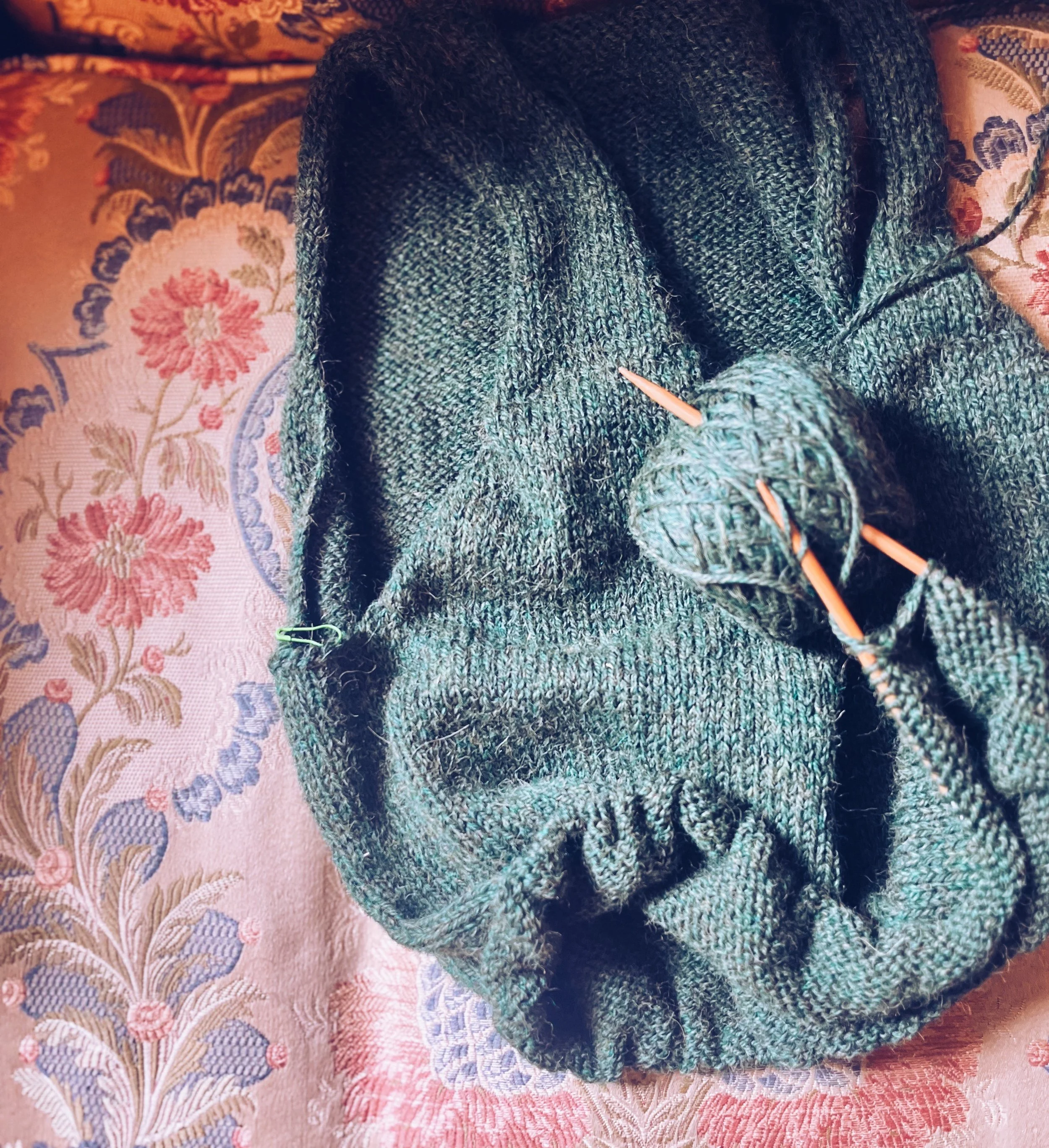
~ I’ve taken up knitting again (with the help of my lovely DIL) and I’m working on a vest for the fall. It is so exciting to see a garment take shape under my needles.

~ And I’m reading, of course. A few standouts:

  • Sara Baume:  I loved Seven Steeples, but I’ve added A Line Made by Walking to my favorites now too. The story of an artist working her way through grief and depression, it is finely observed and wonderfully quiet. Baume’s character struggles with her identity as an artist, wondering if she has been lying to herself about her talent, but all the time we as readers can see that she moves and thinks and observes as an artist. It’s a meditation on the ways we are unkind to ourselves and hold unrealistic expectations and, in its own way, permission to be small and unambitious. A nice companion to this is Baume’s Handiwork, which is her own meditations on her life as an artist.

  • Karen Russell: The Antidote. I love Russell’s inventiveness and embrace of the off-beat. This new novel is set in the Dust Bowl and looks at the ways we willfully and collectively forget our sins.

  •  Belinda Bauer: The Impossible Thing (audiobook). Terrific narration. This is based on the real story of the Metland eggs and the history of egg collecting, which is a lot more exciting than it sounds.

  • Jorge Luis Borges: Labyrinths. This is the first time I’ve read Borges and I understand why people say he’s so singular. (I can see his influence though, in books like Eco’s The Name of the Rose, or Thomas Pynchon’s The Crying of Lot 49, maybe even in Ted Chiang’s work, if you like any of those writers.) But this collection feels so timely. It deals a lot with the recursive nature of the world. Things repeat, time overlaps, things exist now because they existed before. Lately I’ve been stuck on the story, “Tlön, Uqbar, Orbus Tertius”. It’s about a fictional world called Tlön which is created by a “secret and benevolent society” of academics. They invent an entire language, mythology, numeracy, philosophy and science for Tlön over a great many years.   The society’s core belief is that nothing is real unless it is perceived, or in other words, ideas create reality – and they prove this by slowly hiding their false “history” inside actual cultural records. Over time, Tlön, whose “existence” is now sprinkled into encyclopedias and textbooks and historical records, becomes real to future people who don’t know it was an intentional fiction to begin with. (It's almost like this has happened before. Maybe we should all be reading literature all the time before it’s too late?)

  • Sharon Olds: Arias. I read one of these a day and I’m pretty much always astounded by her fearlessness. From “Her Birthday as Ashes in Seawater”

  • “Oh, Mom. Come sit
    with me at this stone table at the bottom
    of the Bay, here is a barnacle of
    egg custard, here is your tiny
    spoon with your initials, sup with me
    at dawn on your first day—we are all
    the dead, I am not apart from you,
    for long, except for breath, except for
    everything.”

As always, I love to hear from you. Share what you’re reading or how you’re surviving our crazy world.

For now,

Tonia

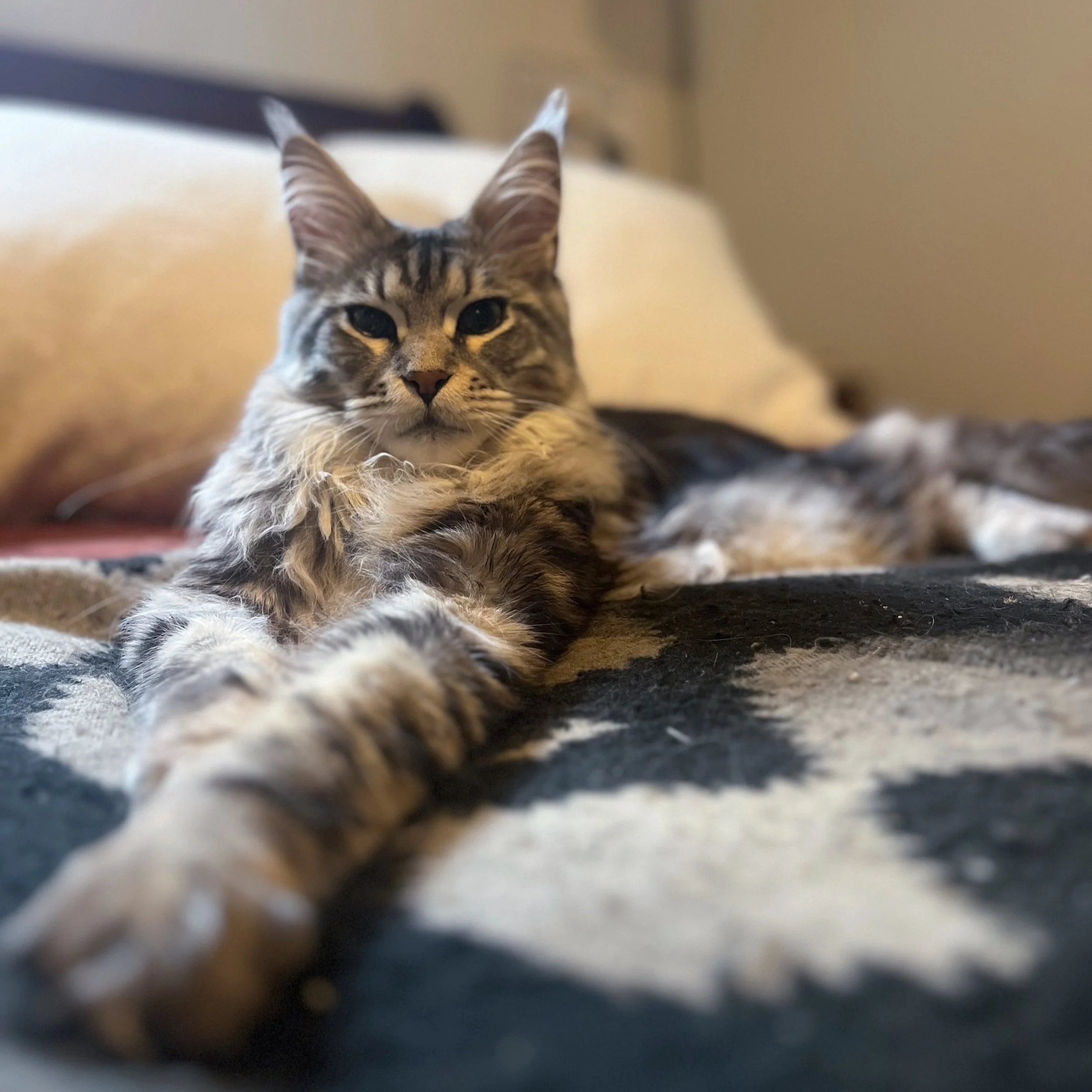
 P.S. I got new kittens and they have been such a bright spot.

Wendell

Wallace

Geography of grief :: April 2025

The ER waiting room has metal detectors and an armed guard and a lot of chairs that are disconcertingly close to other people. I’ve spent an uncomfortable amount of time in this place the past few weeks because my dad has a terrible cancer that refuses to be stopped. I choose the most isolated seat for waiting and hope that my thin mask will keep out whatever is making the man in the corner retch repeatedly or the woman in the front cough until she sags breathless in her chair. The air reeks one day of bleach and another of vomit and always of worry, if not fear. One day there is a young man lying on the single bench with a bloodied arm raised over his head. Another, there is a woman sitting near the desk asking everyone who passes if she can have a drink from their water bottles. I make a sad little game of watching the startled clutching that follows this request.

I bring my homework with me, try to give my attention to composition theory or Titus Andronicus, but it’s pointless. Any words I read float untethered through my brain, knocking mercilessly against medical jargon and test results and expected outcomes. In the ER, time stretches and then suddenly compresses. Somewhere behind a door, my father cannot keep his eyes open. The bones of his face show sharply beneath his skin. When it is my turn to sit by his bed I see new similarities between us – the shape of our jaws, the narrow slope of our noses. Something inside my skin shrinks from this awareness, wants to retreat from this suffering body whose DNA echoes loudly inside my own. To combat this cowardice I hover around him, adjusting his blanket, the octopus of tubes running from his limbs, the pillows beneath his swollen feet. Already, these actions are taking the shape of memory, as if the time has already passed, as if I am already looking back.

Life splits in two. There is the time with my father and the time when I return to my own life. I feel profoundly present in both spaces. I say yes to every invitation for coffee or an evening out, I take urgent notes in each class. At home, I watch myself attending to ordinary tasks as if they are momentous occasions. Everything seems worthwhile, everything feels like a privilege. Except for when it doesn’t. Suddenly all I can do is drag myself to the couch for another round of British detective shows and watch the dog hair collect on the surface of the floors that last week seemed almost holy in their cleanliness.  

The geography of grief, my friend Missy texts, is mysterious and ungovernable.

~ In these strange days, I’m thinking a lot about how I use my time. I bought a Brick and made my phone into a texting/photo/phone call device only and I ordered the new LightPhone so I can make this a permanent thing. I’m doing a ton of waiting right now – in the ER, in doctor’s offices, etc – but I have no desire to waste these moments in the netherworld of scrolling.

My son and I also committed to 100 days without following the news. I deleted all the political newsletters, blocked the news sites, ignore the headlines which are all designed for maximum fear/outrage impact. Last week I pulled up a weather site to plan for the week ahead and the headline, perched over a 5-day forecast of gorgeous spring sunshine, was “Temps to plummet on Saturday!!” Even the weather requires my dismay and anxiety now. I’ll pass, thanks. I started going outside just before bed to look at the sky instead. Turns out you can feel rain invisibly gathering in the atmosphere ahead of time, that clouds sneak in softly under cover of darkness, that cold reveals itself as soon as the sun goes down. That’s all the forecast I actually need.

     I’m listening to all the things my body wants. Like tea instead of the harshness of coffee, silence instead of music, walks instead of heavy exercise, naps with my kittens and early bedtimes. I find I can’t bear the thought of eating animals right now, so I’m back to the comfort of plants, who seem always ready to welcome me home.

      I haven’t had a lot of bandwidth for serious books lately (though that hasn’t stopped me from stress buying them!), but I’m reading poetry every day, including Mary Szybist’s work, and my friend Kyce Bello’s new book. I’m also slowly making my way through Helen Macdonald’s H is for Hawk, which manages to capture the feeling of grief in such unexpected ways.

      How about you? Are you reading anything good right now? What things are making you feel sane and settled? I’d love to hear.

      Thanks so much for reading, for keeping me in your inbox. I always want to write more. Someday I think I actually will, but I so appreciate your patience until then.

 Peace,

Tonia

Oyster Knife :: November 2024

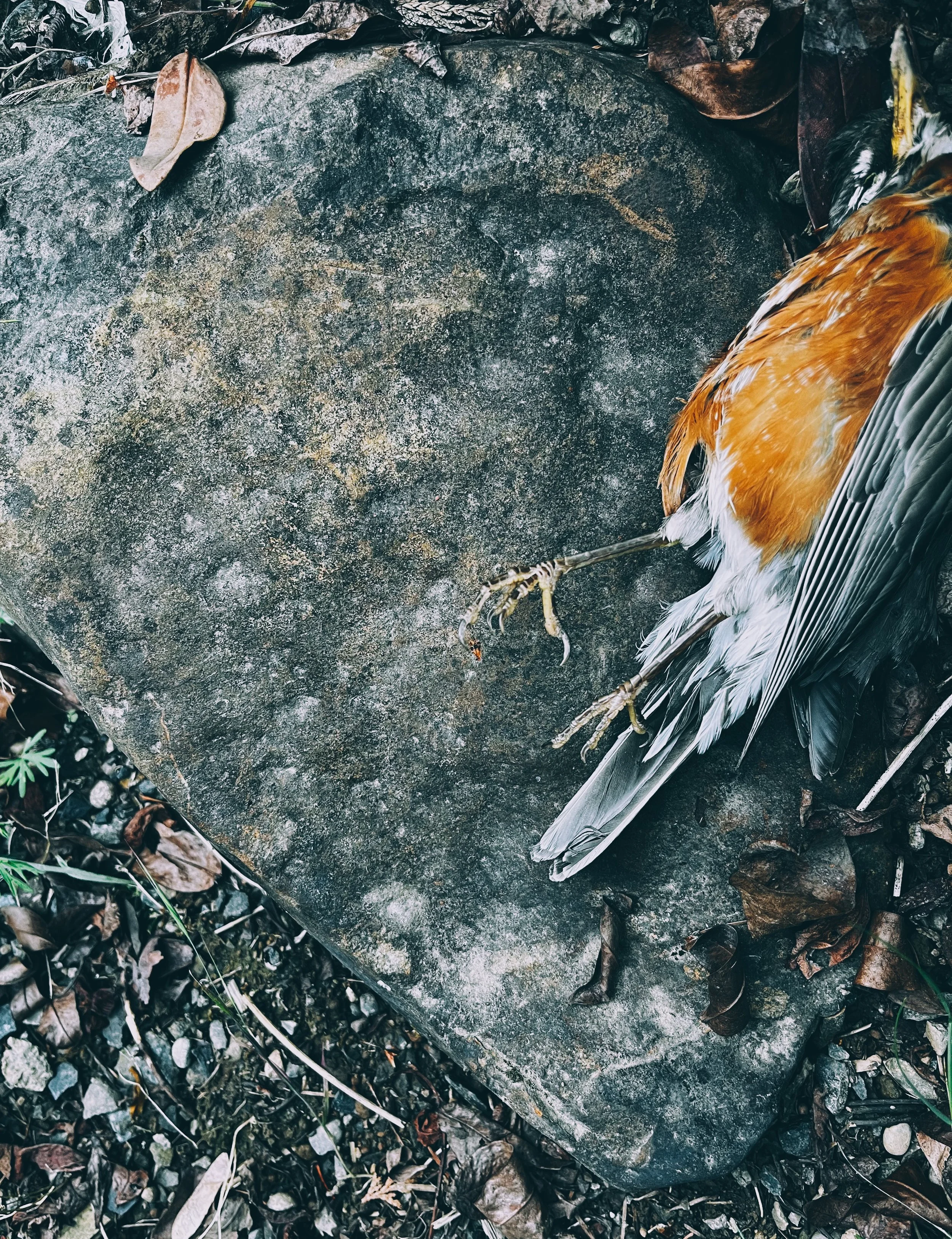
Last night I dreamed an eagle flew into our house. We screamed and jumped up while it perched serenely on the back of our couch, huge and beautiful, and we ran around hiding cats and looking for gloves, trying to figure out what to do with it. It hopped to the floor and began exploring, clicking across the hardwoods, testing the rug, chasing off the dog. I ran to get my camera to record the event and when I came back, it had grown smaller, about crow-sized. I watched as it picked through the cat’s food with its beak, and by the time someone came back with the gloves, it had shrunk even more. Now it looked like a pigeon bobbing around in the living room. Over the next few minutes it changed again. Its feathers faded, its body hollowed out, a fire ignited in its chest and flamed briefly upward. The eagle put its beak on the ground and tipped over on its side, dead.

I woke sad and a little stunned that my subconscious had given me this story in the night. Yes, I thought, this is exactly what it feels like. Even if the country survives this intense fracturing, what I thought about America, the deepest part of me that trusted in our basic decency and goodness has tipped over, dead.

Since election night, I’ve been looking for torches, something to show me the way forward now. This shimmered out of the dark at me yesterday, from Zora Neale Hurston’s 1928 essay, “How It Feels to Be Colored Me.”

I do not weep at the world, I am too busy sharpening my oyster knife.
— Zora Neale Hurston

Hurston was writing about the limits a segregated America tried to put on her and how she refused them. Despite the pervasive, soul-crushing racism she faced, she saw herself as belonging to the world, capable in it, entitled to that oyster prize like every other human. I love that so much. Maybe I just need to feel possible, to have a direction for all this dismay, but it’s the thought of getting down to work, of honing my blade, that is helping me live right now.

This is precisely the time when artists go to work. There is no time for despair, no place for self-pity, no need for silences, no room for fear. We speak, we write, we do language. That is how civilizations heal. I know the world is bruised and bleeding, and though it is important not to ignore its pain, it is also critical to refuse to succumb to its malevolence. Like failure, chaos contains information that can lead to knowledge - even wisdom. Like art.”
— Toni Morrison

Sometimes what I have to offer the world feels so slight, just a thread of words tossed into the wind. But writing is what I do, and I’m going to work now. Here, there, everywhere.

How about you, my friends?

Sending love,

tonia

P.S. You might like Eve L. Ewing’s poem “what I mean when I say I’m sharpening my oyster knife”